
Kegel Exercises for Women: Simple Tips for Better Bladder Control
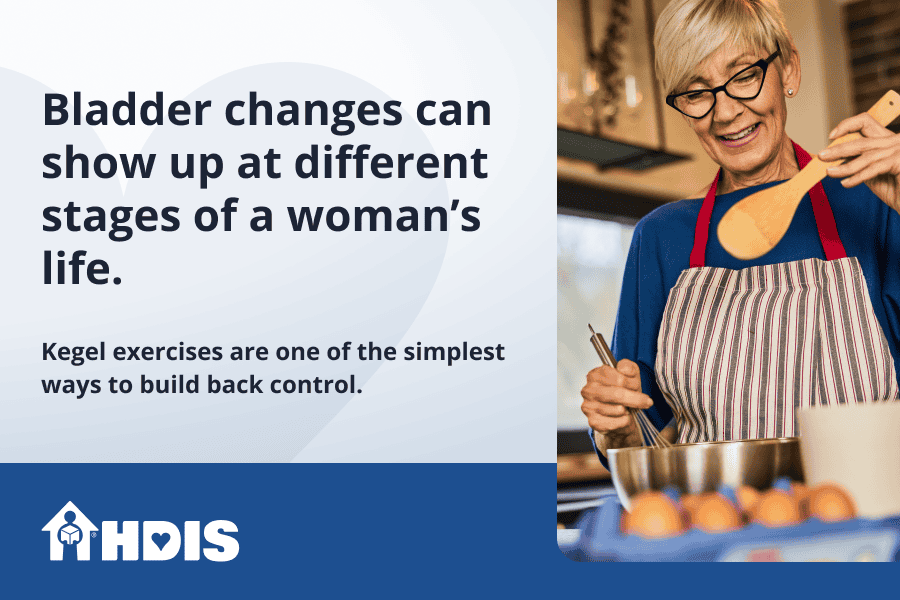
Kegel exercises for women are one of the most common ways to build bladder control at home.
Women of every age and stage of life have heard the sentence "Do your Kegels!" New mothers hear it at their first post-birth check. Women in their forties get the advice when they experience the first leaks. Older women hear it again when the urge grows harder to hold.
This guide explains:
- What Kegels are and why they are important
- How to find the right muscles and do the exercises correctly
- How many to do, and how soon you can expect results
- The mistakes that affect bladder health improvement
- When Kegels are not the right answer
Understanding Kegel (Pelvic Floor) Exercises
Developed by Dr. Arnold Kegel, Kegels (also called pelvic floor exercises) are quick squeeze-and-release movements of your pelvic floor muscles.
These muscles support your bladder, bowel, and uterus. They can weaken due to various reasons:
- Pregnancy and childbirth, especially after vaginal delivery, which stretches and strains the muscles
- Perimenopause and menopause, when falling estrogen thins and weakens the supporting tissues
- Aging, which gradually reduces muscle strength
- Being above a comfortable weight, which adds pressure on the pelvic floor
- Chronic coughing, straining, or constipation, which repeatedly strains your muscles
- Heavy lifting over time, including some jobs and workouts
- Pelvic or gynecological surgery, such as a hysterectomy
There are multiple benefits from doing Kegel exercises for women. They help ease urgency, support recovery after childbirth, and allow you to stay active in the things you enjoy.
Best of all, no one can see you doing them. You can practice at your desk, in the car, or while the kettle boils.
How To Find Your Pelvic Floor Muscles
To strengthen these muscles, you have to feel where they are first.
The simplest way to do that is to imagine you are trying to stop yourself from passing gas or stopping the flow of urine midstream.
The muscles you're squeezing to do that make your pelvic floor.
Use the stop-the-flow part only for locating the muscles. Practicing Kegels while you urinate can keep your bladder from emptying fully and raise the risk of infection.
If you're not sure you have the right muscles, talk to a pelvic floor physical therapist. They'll help you find the muscles and build a routine that suits your body.
How To Do Kegel Exercises for Women Correctly
Once you have found the muscles, learning how to do Kegel exercises is fast and easy.
Empty your bladder before a session. Get into a comfortable position. Tighten your pelvic floor muscles and lift them up and in. Hold for three to five seconds, working up to 10 seconds as you improve.
Release and rest for the same count. The muscle needs to relax completely before the next squeeze.
Keep breathing normally the whole time. Your stomach, thighs, and buttocks should stay soft, so only the pelvic floor is working.
You can do your first Kegels while lying down at home.
Once the muscles get stronger, you'll feel confident enough to do your Kegels standing while cooking, washing the dishes, or waiting in line at the store.

How Many Reps and Sets Per Day
Start with a set of 10 squeezes three times a day, which makes roughly 30 Kegels in total.
You can do them at different times: one set in the morning, one in the afternoon, and one in the evening.
Practicing daily works better than a big weekly push. Tying your pelvic floor routine to something you already do each day, like sitting down for coffee, makes them easy to remember.
Common Mistakes To Avoid
Many women do Kegels regularly and still see little change. This might be the result of a few common mistakes that are easy to fix.
Holding Your Breath
If your upper body tenses, this means you’re putting effort in the wrong place. Slow down and breathe through each squeeze.
Squeezing the Wrong Muscle
If your stomach, thighs, or buttocks tighten, the work shifts away from your pelvic floor. Keep those relaxed and focus on your pelvic muscles.
Not Resting Between Squeezes
Rushing from one squeeze to the next tires the muscles. Match your rest to your squeeze, so the muscles have time to recover.
Giving Up Too Soon
Results take time, so be patient. Make time for Kegels daily, and the results will come.
How Long Until Kegels Improve Bladder Control?
If you're practicing daily, you'll notice fewer leaks after four to six weeks. You may expect fuller results over the next three to six months.
You'll see the benefits only if you turn Kegels into a daily routine. Once you stop, the muscles gradually lose the strength you built.
Across 31 international trials, a Cochrane review of more than 1,800 women found that those who trained the pelvic floor saw their leaks improve far more often than those who did nothing.
The exercises worked across different types of incontinence, such as stress, urge, and mixed incontinence
When Kegels Aren’t Enough or Aren’t Right for You
Kegels help many women, but they are not the answer for everyone.
Some women have a pelvic floor that is already too tight. Adding more squeezing can make symptoms worse.
Signs that squeezing may not be your fix include:
- Pelvic pain
- Pain during sex
- Constipation
- Feeling that you never fully empty your bladder
- Urgency with no leaking
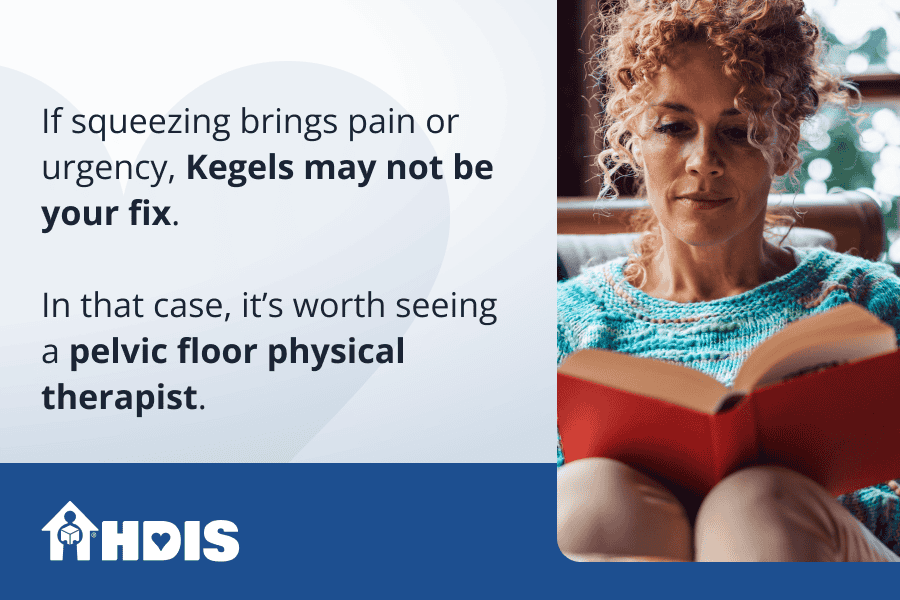
If Kegels make these symptoms worse, visit a pelvic floor physical therapist. They can tell whether your muscles need strengthening or relaxing.
Kegel Exercises for Pregnant Women and After Birth
Pregnancy puts steady pressure on the pelvic floor, stretching and straining the muscles that support your bladder.
As a result, you may notice leaks when you cough, sneeze, laugh, or get up from a chair. They often become more frequent as your baby grows.
Kegel exercises at every stage of a healthy pregnancy. They'll help:
- Support growing weight.
- Prepare the muscles for birth.
- Make recovery afterward a little smoother.
After your baby arrives, you can resume them once your provider says you are ready.
Many women begin with a few gentle squeezes and do a little more each week.
Do Kegels Work for Men Too?
Yes. Men can also experience the benefits of Kegels.
They can support bladder control after prostate surgery or a urinary tract infection (UTI).
The principle is the same, and with steady practice most men notice better control within a few months.
Extra Protection With HDIS While You Build Strength
Strengthening your pelvic floor takes weeks. So HDIS has a solution for the time until you see results.
For 40 years, our personal care experts have helped women take care of their bladder health quietly and comfortably, the way they’d want.
Which protection fits? It depends on your day.
A light leak now and then calls for slim bladder control pads and liners. Placed inside your own underwear, they vanish under your clothes, so nothing about how you look or feel gives it away.
For a busy day out or a long drive, protective underwear provides extra security for hours.
Our incontinence supplies also include booster pads that add absorbency to what you wear and underpads that protect your bed and favorite chair.
Worried what the neighbors might see?
Everything arrives in plain, unmarked packaging, and any unopened pack can be returned for a full refund.




Getting Started
Discount for Personalized Delivery Plan: No more browsing the incontinence aisle at your local drug store. Receive a 5% discount, and your products arrive on your schedule.