
12 Signs of Perimenopause You Shouldn't Ignore
Perimenopause can last anywhere from two to eight years, and for many women it begins quietly, one small change at a time.
A shorter cycle here. A restless night there. A forgotten meeting. A laugh that ends in a small leak.
When they happen in isolation, you can easily shrug them off. Together, they're often the first signs of perimenopause.
We’ll share the 12 most common signs, explain why they happen, and suggest what can help to move through this period in a comfortable and confident way.
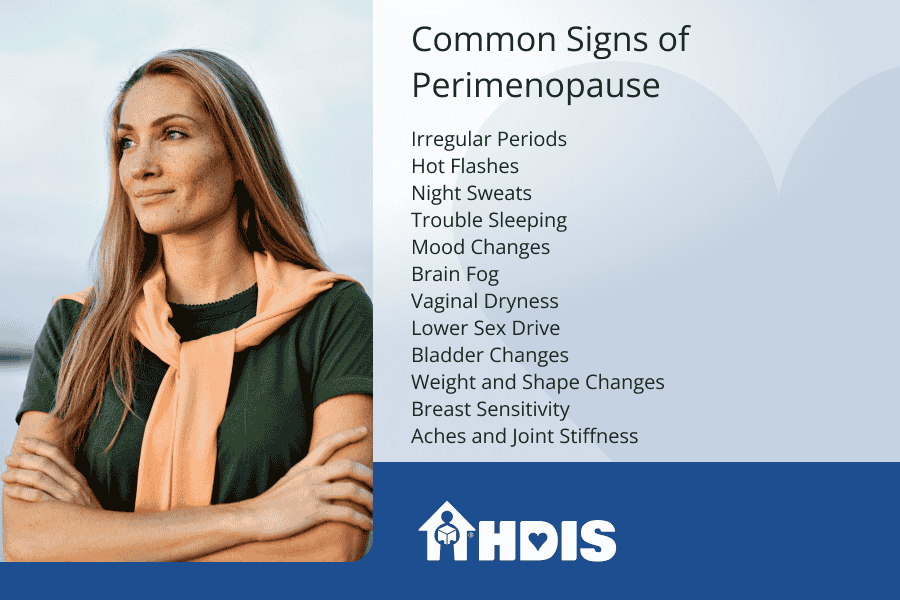
The 12 Most Common Signs of Perimenopause
Behind most signs of perimenopause is a single driver: estrogen that rises and falls as your ovaries slow their work.
Because that hormone is responsible for many systems, the signs may affect different parts of your body, often feeling unconnected.
Irregular Periods
After decades of a steady pattern, your periods begin to change. A cycle comes early, you skip a full month, and then the next arrives heavier than you remember.
For most women, this is the change that they spot first.
Hot Flashes
Of all the changes perimenopause brings, hot flashes are among the easiest to spot. You feel your chest, neck, and face burning when the temperature around you hasn’t changed.
Your cheeks might flush and your heart might beat faster. The change may pass in a few seconds or linger for several minutes, and it can catch you anywhere, mid-meeting, mid-sentence, or in the middle of the night.
Night Sweats
That same heat can come while you sleep, waking you in a comfortably air-conditioned bedroom while you’re using nothing but a light blanket, just to find the sheets and your top damp enough to need a change.
Trouble Sleeping
You fall asleep after reading in bed or watching your favorite show. Then wake up at 3 a.m. and being unable to drift back. Or sleep just won't come the way it always did.
Mood Changes
You feel irritable, tearful, or anxious like never before.
An offhand comment from your partner makes you burst into tears. Traffic that never bothered you leaves you gripping the wheel.
Brain Fog
You walk into a room and forget why or can’t remember a familiar word mid-sentence.
It can feel unsettling, even a little frightening, as you wonder what’s wrong with you.
Vaginal Dryness
You may notice a slight irritation during the day while sitting in a long meeting, or discomfort or soreness during sex.
As estrogen drops, the delicate tissues thin and can’t hold moisture.
Lower Sex Drive
Desire fades and you can't quite say why. Broken sleep, dryness, and changing hormones tend to pile up together, and any one of them can dim your interest.
Bladder Changes
Bladder changes are among the signs of perimenopause women expect the least. A sneeze, a laugh, or a jog in the park can bring a small leak that was never there before.
Or an urge hits fast and hard to hold, making you look for the nearest bathroom.
Weight and Shape Changes
You keep to the same routine, yet notice the scale creeps up, or you can’t fit in your favorite jeans.
And the diet that always used to work suddenly doesn't seem to make a difference.
Breast Sensitivity
Your breasts feel tender or sensitive, no longer matching your cycle.
The ache can come and go unpredictably depending on your estrogen and progesterone levels.
Aches and Joint Stiffness
You wake stiffer than you used to or notice new aches in your hands, knees, or hips. You struggled to finish the tennis match with your friend and couldn’t open a stubborn jar the other day.
When Perimenopause Typically Starts
For most women, perimenopause begins in their 40s. For a smaller group, the signs of perimenopause show up earlier, in their late 30s.
Take a woman of 38 whose periods have started coming a few days early or who’s waking at night for no clear reason.
She may think she's far too young for any of this. Because it’s less common, it’s worth talking to a doctor to rule out other causes like thyroid changes.
It typically takes four years on average, with a normal range of two to eight. Either end of that range is normal and unique to your body.
The Signs Perimenopause Is Ending
Just as there are signs of perimenopause at the start, there are signs it is drawing to a close.
As you near its end, periods space out further, and there are longer stretches, often skipping several months at a time.
Hot flashes, mood swings, and other symptoms begin to soften, although this varies from woman to woman.
Four months could pass with no period, then one arrives, then five more months of nothing. That stop-start pattern can often feel like a false ending but is quite common for late perimenopause.
You reach menopause only after a full 12 months with no period at all, no bleeding or spotting.
Bladder Changes Most Women Aren't Warned About
Of all the signs of perimenopause, changes in bladder health catch women most off guard, because they are rarely talked about openly.
Estrogen helps keep your bladder, urethra, and pelvic floor strong. As its levels fall, those tissues grow thinner and less elastic, and the bladder starts behaving differently.
That can mean an urge that comes on fast and won't wait, more frequent trips, waking at night to go, or a leak when you cough, laugh, or lift something. This condition is known as incontinence.
Small changes in your daily routine like pelvic floor exercises and steady hydration can keep these signs in control.
When that’s not enough, the right incontinence protection will provide comfort and reassurance as you move around your day.
Modern designs are slim and soft enough to vanish under everyday clothes, so no one notices the change.
You can choose slim bladder control pads and liners for occasional leaks, protective underwear for a long drive or a hard workout, and underpads to guard the mattress and furniture for uninterrupted sleep.
A Quick Perimenopause Self-Check
There's no single test for perimenopause, and blood tests can show only part of the hormone picture.
However, regular monitoring of the changes in your body can help you establish a pattern.
Think about:
-
Periods that are irregular, shorter, or longer
-
Skipped periods
-
Hot flashes or night sweats
-
Trouble sleeping, or waking and struggling to fall asleep again
-
Mood changes, anxiety, or brain fog
-
Vaginal dryness or lower sex drive
-
Bladder changes
-
New weight gain, breast tenderness, or joint stiffness
If you have spotted a few of these together, perimenopause is a likely explanation. It isn't a diagnosis, but it's a useful thing to bring to your doctor, who can confirm what's going on.
Looking for Discreet Protection Through Perimenopause? Check Out HDIS
Perimenopause is a period when your body changes in ways that leave you feeing unprepared.
HDIS has spent 40 years learning what women need during some of their most challenging times, from the weeks after childbirth to perimenopause and beyond it.
Chances are our specialists have guided someone whose week looks exactly like yours.
Need slim pads and liners for light, occasional leaks or protective underwear and booster pads for overnight protection?
If a choice feels confusing, we’ll talk it through with you, unhurried, until the size and absorbency are just right.
Your deliveries land in packaging that gives nothing away, addressed plainly, so the contents stay yours alone.
Picked something that turned out wrong? Unopened packs come back for a full refund, and you owe us no reason why.
Set up a monthly delivery, and fresh supplies simply appear without worrying you’ve run out of your protection.
Signs of Perimenopause: FAQs
What are the first signs of perimenopause?
Your period usually changes first: cycles grow shorter, longer, or start to skip. Hot flashes, sleep trouble, and mood shifts are other things you may notice.
What age does perimenopause usually start?
For most women, perimenopause begins in their 40s, and the transition typically runs between ages 45 and 55. Some notice changes in their late 30s.
Can perimenopause start in your 30s?
Signs of perimenopause in your 30s are less common, so it's worth seeing your doctor to confirm the cause.
How long does perimenopause last?
It lasts about four years on average, with a normal range of two to eight years. Your own timeline may fall anywhere in that range.
What are the signs perimenopause is ending?
Periods come at larger intervals and can skip for several months at a time. Other symptoms like hot flashes and mood changes may ease off. Menopause is confirmed after 12 straight months with no period.
Is bladder leakage a sign of perimenopause?
It’s a common issue. Falling estrogen weakens the tissues that support the bladder, which can bring leaks, urgency, and more frequent trips.




Getting Started
Discount for Personalized Delivery Plan: No more browsing the incontinence aisle at your local drug store. Receive a 5% discount, and your products arrive on your schedule.