
Stress Incontinence: A Complete Guide to Causes and Care
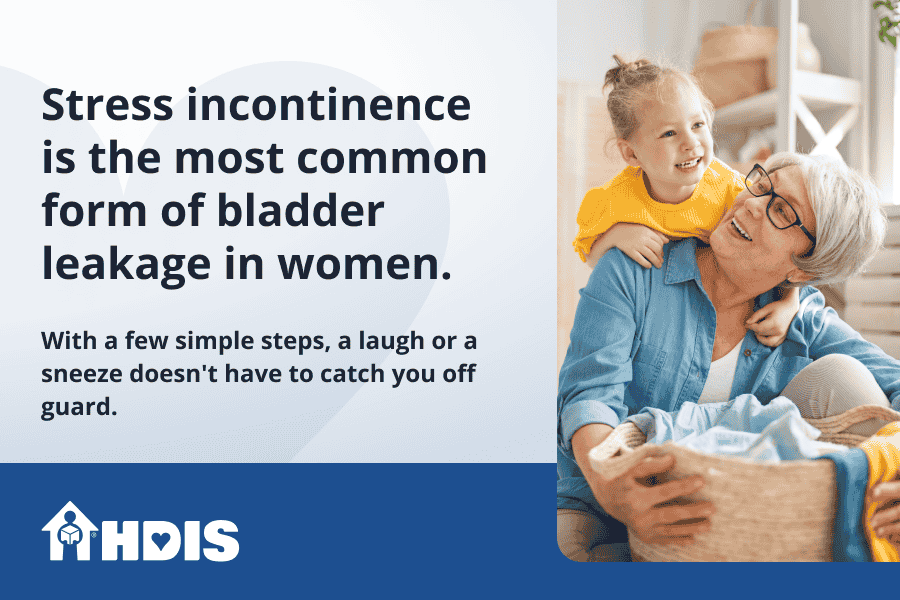
Have you felt a small leak the moment you bent down to lift your grandchild off the floor, laughed hard at a friend's joke, or sneezed in a quiet room?
Chances are, it's stress incontinence, a condition that affects nearly a quarter of U.S. women aged 20 and older. Men can have it too, most often after prostate surgery.
We'll share:
-
What stress incontinence is and why it happens
-
What sets it apart from urge incontinence
-
The symptoms to pay attention to
-
Treatments and exercises that help
-
Discreet protection for the moments you need it
Understanding Stress Incontinence
Stress incontinence, shorter for stress urinary incontinence, is a small urine leak that happens when there's physical pressure on your bladder.
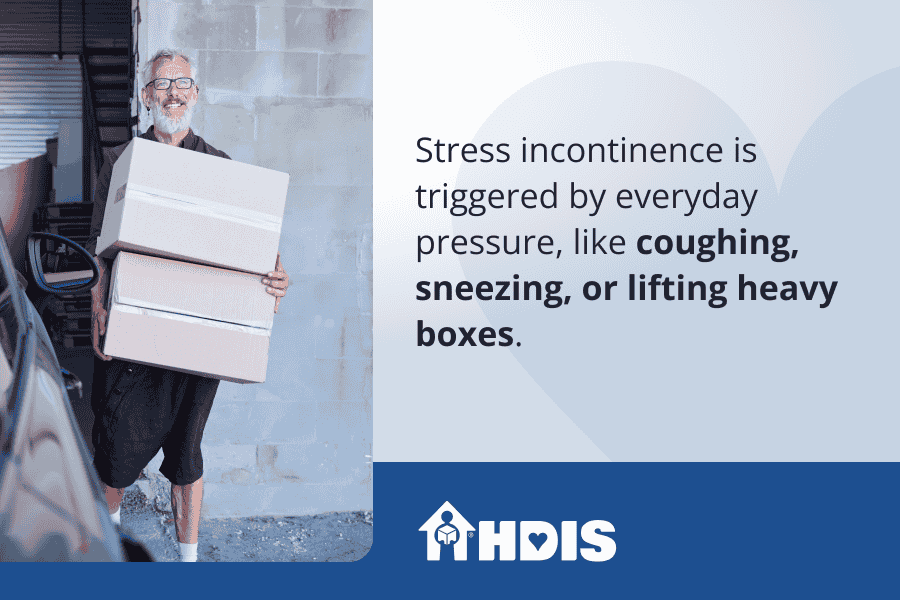
This can include lifting a laundry basket, carrying a heavy grocery bag, getting up from a low chair, shoveling snow, or kneeling to weed in the garden.
What Causes Stress Incontinence?
So, what happens? The bladder itself is usually working fine but the muscles and tissues that normally keep your bladder closed have become too weak and give way under the pressure, so a little urine escapes.
That weakening can be caused by various life events.
For women, pregnancy and childbirth stretch and strain the pelvic floor, sometimes making it difficult to recover.
During menopause, falling estrogen thins the supportive tissues, and this is often when leaks start or worsen.
For men, the most common cause is prostate surgery, which can affect the muscles that control the flow of urine.
Some causes, such as a smoker's cough, frequent heavy lifting, high-impact exercise, and straining from constipation, can affect both men and women.
In addition, carrying extra weight adds a steady load, and the tissues naturally lose some strength as we age.
Symptoms and When To See a Doctor
When you know what to look for, you'll easily recognize the signs of stress incontinence.
Consider seeing a doctor if bladder changes:
-
Get in the way of your daily life or make you skip activities you enjoy.
-
Come on suddenly or get noticeably worse.
-
Leave a heavy, dragging sensation in your pelvis, which can point to prolapse.
-
Are accompanied by pain, burning, or blood, as those may be signs of a urinary tract infection.
A doctor can confirm the type of incontinence you have, rule out other causes, and help you decide how much support you need.
How To Stop Stress Incontinence at Home: Exercises and Lifestyle Changes
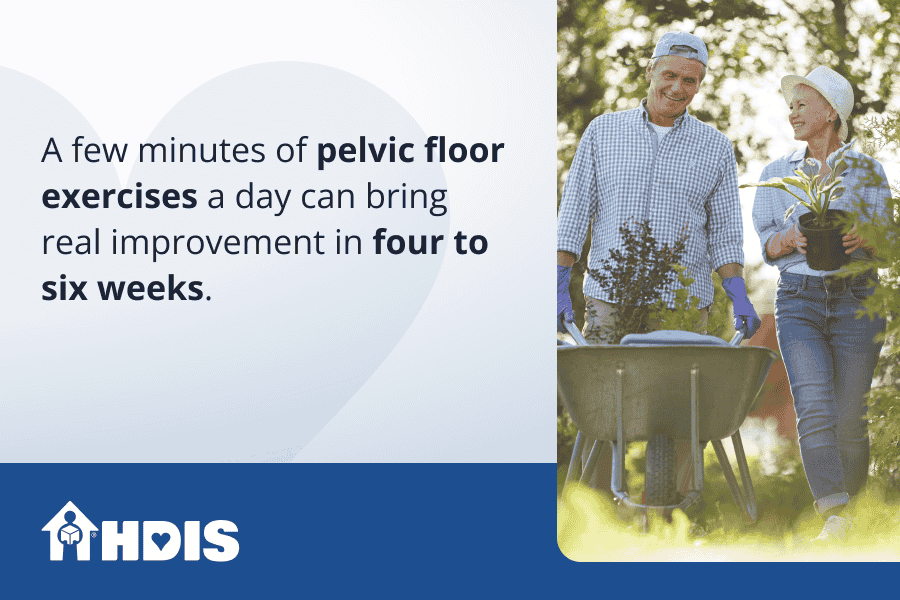
Start with pelvic floor exercises, called Kegels. To find the right muscles, squeeze as if you were trying to stop the flow of urine or hold in gas.
Hold for a few seconds, release, and repeat in short sets throughout the day.
If you are unsure that you are doing the exercises correctly, talk to a pelvic floor therapist.
You can do Kegels anywhere, whether sitting at your desk, waiting in line, or watching television, without anyone noticing.
If you're practicing regularly, you'll see improvement within four to six weeks.
Kegel exercises are not for women, only. There are Kegels for men, and they are often part of recovery after prostate surgery.
In addition, a few changes can make a real difference:
-
Keep a comfortable weight to ease the pressure on your pelvic floor.
-
Quit smoking to eliminate nagging coughs that can trigger leaks.
-
Eat enough fiber and stay hydrated.
Stress Incontinence Treatment Options
Imagine treatment options as a ladder, starting with the gentlest steps and moving up only if you need to.
If Kegels aren't enough, a doctor may suggest a supportive device worn only when you need it.
For women, that is often a pessary or a urethral insert that supports the bladder neck.
For men, options are usually external, like a compression device or a collection system. A specialist can help you choose the right one for your situation.
When leaks don't respond to those steps, you may decide to consider surgery.
A sling is a common procedure for both women and men, and it is usually reserved for when the other options haven't brought enough relief.
During the procedure, a surgeon places a soft, supportive band under the urethra to gently hold it in place so it stays closed when pressure builds.
It's a minimally invasive operation, allowing most people to go home the same day.
Currently, there's no FDA-approved medication for stress incontinence. That's why the focus remains on strengthening your pelvic floor and, when needed, turning to devices or surgery.
How HDIS Helps You Manage Stress Incontinence Day to Day
For 40 years, HDIS has helped people stay comfortable and confident during their most challenging moments, from the weeks after childbirth and recovery after surgery to the changes of menopause and the years beyond.
Because stress leaks are usually small, you rarely need heavy absorbency. Talk to our team and they'll help you match the product to a light or moderate need.
Bladder control pads and liners are an excellent choice for light, occasional leaks, tucking neatly into your underwear.
Protective underwear works well for more active days, offering extra security.
Browse our free catalog from home and set up a personalized delivery, arriving in a discreet, unmarked box, so you're always stocked up.
Stress Incontinence: FAQs
What is stress incontinence?
Stress incontinence is the leaking of small amounts of urine when there's physical pressure on your bladder.
What causes stress incontinence?
This condition is caused by a weakened pelvic floor due to pregnancy and childbirth. The weakness can also come from menopause, prostate surgery in men, or the natural changes of aging. A chronic cough, heavy lifting, and extra weight can also trigger stress incontinence.
How to fix stress incontinence?
Pelvic floor exercises can help, and the time to see the first improvement signs is four to six weeks. If you don't see progress, talk to your doctor about incontinence devices, physical therapy, or other treatment options.
How do I stop stress incontinence?
Strengthen your pelvic floor with regular Kegels, keep your weight in a healthy range, and treat any lingering cough or constipation.
Can men have stress incontinence?
Yes. In men, this condition is common after prostate surgery. Kegel exercises can help you strengthen your pelvic floor and regain control.
Does stress incontinence go away on its own?
It rarely disappears without some action on your part. Consistent pelvic floor exercises and simple lifestyle changes can ease symptoms, so you move around your day without worries.