
Incontinence After Prostate Surgery: What To Expect and How Long It Lasts
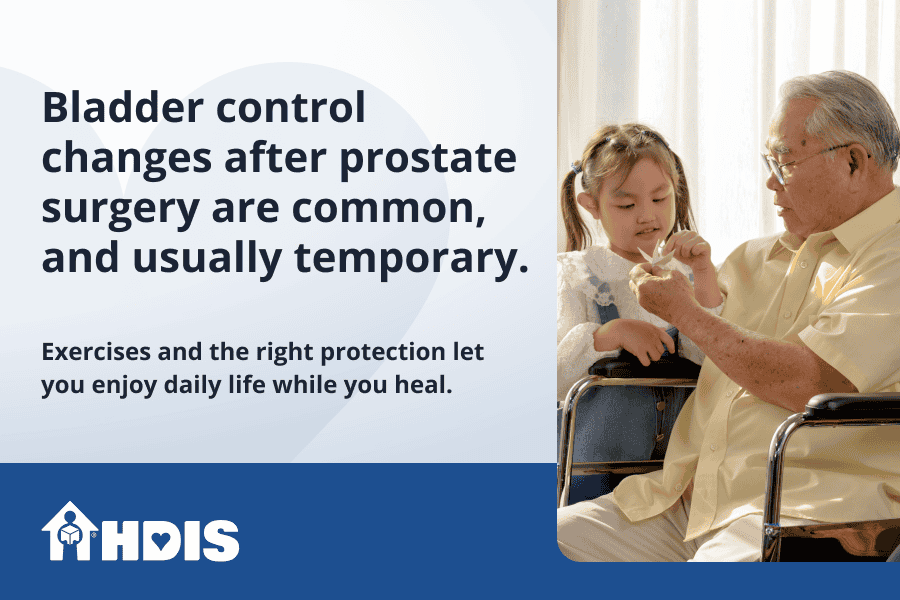
After a prostatectomy, you may notice a leak the first time you stand up or when you cough or laugh.
Incontinence after prostate surgery is one of the most common experiences men go through, and most of them regain control within three to 18 months.
In this guide, you'll find:
- Why surgery may cause leaking
- How long it usually lasts
- The stages of recovery
- Exercises and habits to regain control
- The right protection for each phase and when to call your doctor
Why Incontinence Happens After Prostate Surgery
Your prostate sits just below your bladder and wraps around your urethra, the tube that carries urine out of your body.
When all or part of the prostate is removed, this natural support is disturbed. This means that your pelvic floor muscles must take over much of the work of keeping you dry.
Until those muscles adjust and regain their strength, urine can escape when there is pressure on the bladder.
Leaks that happen under pressure, when you cough, laugh, stand up, lift, or exercise, are signs of a condition called stress incontinence.
It is a normal part of healing, and you shouldn't worry that something has gone wrong.
How Long Does It Usually Last?
For some men, leaking eases within a few months.
In the case of a radical prostatectomy, the operation that removes the entire prostate, recovery can take longer: for 95% of men, it can extend up to 18 months.
Every man recovers on his own clock, so if you are only days or weeks out from surgery, go gently on yourself. The early days are the hardest, but things steadily improve later on.
The Stages of Recovery After Prostatectomy
Recovery rarely happens overnight. Knowing what to expect can ease some of the worry.
In the first days, you will have a catheter in place, a thin, flexible tube that drains urine from your bladder. It usually stays in for one to two weeks until the area has healed enough to remove it.
After the catheter is removed, your bladder begins working on its own again. At first it will not do this well. Many men need absorbent protection around the clock because they experience leaks when standing or moving. This is the stage that's most challenging, but also the stage that improves the fastest.
Over the following weeks and months, the leaks grow lighter and less frequent. You may spot them only during an activity or when coughing or working out. During this period, you may go from heavy to light protection.
By the six-to-twelve month mark, most men need very little or no protection at all. If you are not there a year after your surgery, consider talking to your doctor. They can recommend options that can help.

Pelvic Floor Exercises To Speed Recovery
Kegel exercises can help you strengthen your pelvic floor, the muscles you would use to stop your urine mid-flow.
Tighten them gently, hold for a few seconds, then fully relax, and repeat in short sets through the day. Keep your stomach, thighs, and breathing relaxed as you go.
Although you might feel awkward at first, you'll get used to this rhythm quickly and will notice a difference in a month or two.
You don't need special equipment or settings and can do your Kegels throughout the day without anyone noticing.
A tip if surgery is still ahead: you don't have to wait. Many surgeons suggest starting pelvic floor exercises before your operation, and research suggests men who practice Kegels before their operation regain control sooner.
Habits That Help (and What To Avoid)
In addition to Kegel exercises, a few everyday habits can take pressure off your bladder while you're recovering.
- Ease off on alcohol. Alcohol and incontinence after prostate surgery are closely linked. It’s a diuretic, so it makes you produce more urine; it can also dull the signals between your brain and bladder, reducing control.
- Cut the consumption of coffee, fizzy drinks, very spicy foods, and acidic foods like citrus, as they can add to urgency.
- Sip water steadily through the day; drinking too little concentrates urine and can irritate the bladder, while too much adds pressure and sends you to the bathroom more often.
- Keep your weight comfortable and your bowels regular to avoid extra pressure on your pelvic floor.
- Go to the bathroom when you need to, not just in case, so your bladder keeps its normal rhythm.

Post-Prostatectomy Incontinence: When To Talk to Your Doctor
Most men recover at home with little need for intervention. However, in some situations, it's worth talking to a specialist.
Reach out to your doctor or urologist if:
- Leaks get worse.
- You have pain, burning, or blood when you pass urine.
- You cannot urinate or feel your bladder never empties.
- You are still leaking heavily one year after the surgery.
Choosing Protection for Incontinence After Prostate Surgery
Good protection allows you to get back to normal life and enjoy the activities you love: the morning walk, the round of golf, and the long drive to see the grandkids, without a second thought.
In the early weeks, when leaks are heaviest, many men feel comfortable using protective underwear or briefs that offer full coverage and security around the clock.
As the leaks become lighter, you may decide to switch to guards and pads, shaped to fit the male body and worn discreetly inside your own underwear.
By the later stages, a thin liner for the occasional activity leak is often all you'll need.
With HDIS, you can find the full range of incontinence products for men in one place.
Our personal care experts will explain the sizing and absorbency at your own pace. They'll also send samples in a plain, unmarked box, so you can try the most comfortable option for your body.
Once you know what you need, you can use a personalized delivery plan, with supplies arriving right when you need them.
If a choice turns out wrong, you can send the package back for a full refund.
Incontinence After Prostate Surgery: FAQs
Is it normal to leak urine after prostate surgery?
Yes. It happens to almost all men, because the surgery disturbs the muscles that hold urine in. It is a normal part of healing and typically eases over the following months.
Can incontinence after prostate surgery be permanent?
Most men regain bladder control within the first year to 18 months. If this doesn't happen, your doctor can offer other options that can help.
What type of pad or underwear is best to use after prostate surgery?
It depends on the stage of your recovery. In the early weeks, when leaks are heaviest, protective underwear or briefs provide better coverage. As control returns, you can choose between male guards, pads, and later a thin liner. Our team can help you match the product to your needs.
How long does incontinence last after robotic prostatectomy?
Whether the surgery is robotic or open does not change the general timeline much. The typical timeframe is between a few months to a year.




Getting Started
Discount for Personalized Delivery Plan: No more browsing the incontinence aisle at your local drug store. Receive a 5% discount, and your products arrive on your schedule.