
Enlarged Prostate Symptoms in Men: A Complete Guide
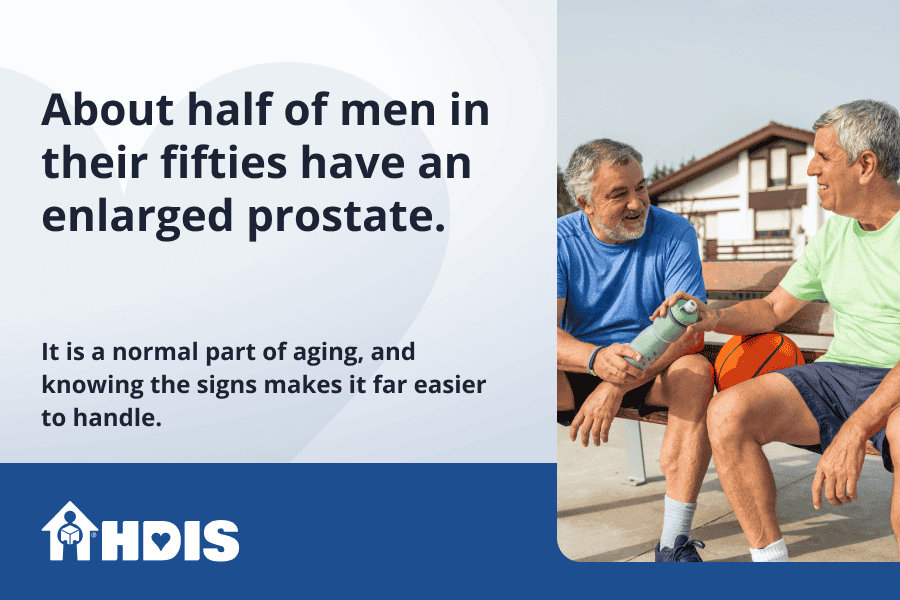
Many men past 45 get up two or three times a night to use the bathroom, or when already there, wait longer than they used to for the stream to start.
These are the first symptoms of an enlarged prostate, a common change that comes with age.
In this guide, we'll discuss:
- What an enlarged prostate is
- The early urinary signs you may spot
- When a symptom needs doctor’s attention
- How to stay comfortable and in control
Early Urinary Symptoms To Watch For
Most of the early symptoms of an enlarged prostate happen due to a narrower urethra and a bladder that must work harder to push urine through it.
They may take months and years to develop but typically include:
- A sudden, strong urge to go that is hard to control
- Trouble getting started, even when the urge is strong
- An unsteady stream that starts and stops
- Having to push or strain to empty the bladder
- Needing the bathroom more often, both during the day and at night
- A feeling that the bladder never fully empties
- Dribbling for a few moments after you finish
- Occasional leaks before you reach the toilet
It's easy to ignore these signs, especially when they appear one at a time.
Noticing a few together is a good reason to discuss them with your doctor at your next checkup.
One thing surprises a lot of men: the size of the prostate does not decide how strong the symptoms are.
A slightly enlarged gland can cause real trouble, while a much larger one may lead to very few symptoms.
What matters is the pressure it puts on the urethra and how your bladder responds.

Enlarged Prostate Condition Explained
The prostate is a small gland, about the size of a walnut. It has a double function:
- Supplies part of the fluid that feeds, protects, and transports sperm.
- Helps control the passage of urine through the urethra.
After the age of 25, the prostate starts to grow slowly. When you enter your 40s (for some men it happens later, around their 50s), it can become large enough to press on the urethra and change the way urine flows.
Doctors call this condition benign prostatic hyperplasia, or BPH. It affects about half of men between 51 and 60 and up to 90% of men over 80.
By 2035, about 8,621 in every 100,000 men worldwide are expected to have an enlarged prostate, up from 7,879 in 2022.
As the name suggests, an enlarged prostate is not cancer and doesn't raise your risk of prostate cancer.
Why an Enlarged Prostate Affects Urination
The prostate sits just below the bladder and wraps around the urethra. That means even a small amount of extra pressure can change the way urine can pass.
As the gland presses in, the urine channel narrows, and the bladder makes an extra effort that you recognize as a weak stream, straining, or a stop-and-start flow.
Over time, the bladder muscle can thicken and grow more sensitive from all that extra work.
A more sensitive bladder can tighten when it is only part full, bringing sudden urges and frequent trips.
At the same time, the narrowed channel can stop the bladder emptying fully. The urine left behind means it fills again sooner, so you need to go again.
When very little comes out, it can lead to a type of leaking called overflow incontinence.
Night-Time Urination and Enlarged Prostate
Of all the symptoms of enlarged prostate, the one men notice first is waking at night to urinate. Doctors call this condition nocturia.
Getting up once is common at any age. The problem comes when it happens more frequently and you don't get enough sleep.
A few simple changes can help.
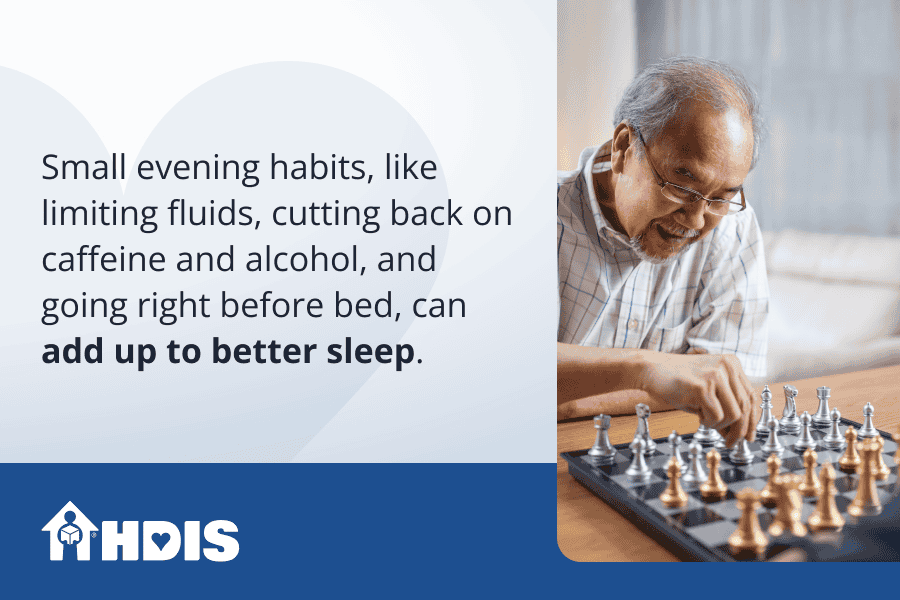
- Cut off fluids a few hours before bed.
- Limit the consumption of caffeine and alcohol in the evening.
- Use the bathroom right before you turn in.
If these don't bring the expected results, your doctor can talk you through treatments made for this exact problem.
When To See a Doctor
Most symptoms of an enlarged prostate build gradually and are not urgent.
Talk to your doctor if urinary changes are bothering you, affecting your sleep, or changing how you plan and move around your day.
Make an appointment if you notice:
- A weak stream, straining, or trouble starting that is getting worse
- Waking more than once or twice a night to go
- Frequent or sudden urges you did not have before
- Leaks or dribbling that bother you
- Any blood in the urine, pain, or burning
Your doctor can confirm whether the culprit is an enlarged prostate and rule out other conditions like urinary tract infection or an overactive bladder.
When Symptoms Become an Emergency
If you can't urinate at all, even though your bladder feels full and uncomfortable, you may have acute urinary retention.
This condition is a medical emergency that requires immediate attention by a doctor who can relieve the pressure quickly and safely.
Left too long, a full bladder that cannot drain can harm the kidneys.
Other situations to seek immediate help include severe pain in your lower belly or side or a fever alongside urinary symptoms, as these can point to an infection or another problem that needs treating.
Complications If BPH Is Left Untreated
Most men with an enlarged prostate never run into serious trouble. Still, it's worth knowing that when the bladder never empties fully, the urine left behind can lead to:
- Repeated urinary tract infections
- Bladder stones caused by minerals collecting in standing urine
- A stretched, weakened bladder muscle that struggles to contract
- Blood in the urine
- Kidney issues
None of this is meant to alarm you. These problems are far less likely when symptoms are watched and managed. That is the real reason to pay attention early.
Managing Leaks and Dribble Day to Day With HDIS
Enlarged prostate symptoms in men often include a little leaking or an after-dribble.
While you and your doctor sort out the right medical care, there is a lot you can do to stay comfortable.
Backed by four decades of experience, HDIS has helped men and their families find reliable, discreet protection that fits real life and is invisible under everyday clothes.
- For light dribble and the occasional leak, you may choose shields and guards for men, which are shaped for the male body and tuck discreetly into your underwear.
- On days you want extra reassurance, men’s protective underwear pulls on and off like regular underwear, with inner leg cuffs and a gel core that locks away moisture and odor so you stay comfortable and dry.
- For peace of mind overnight, men’s overnight underwear provides up to 12 hours of protection and odor control, so you enjoy a full night’s sleep.
Get back to the morning fishing trip, the long drive to see the grandkids, or a full night’s sleep.


Getting Started
Discount for Personalized Delivery Plan: No more browsing the incontinence aisle at your local drug store. Receive a 5% discount, and your products arrive on your schedule.