
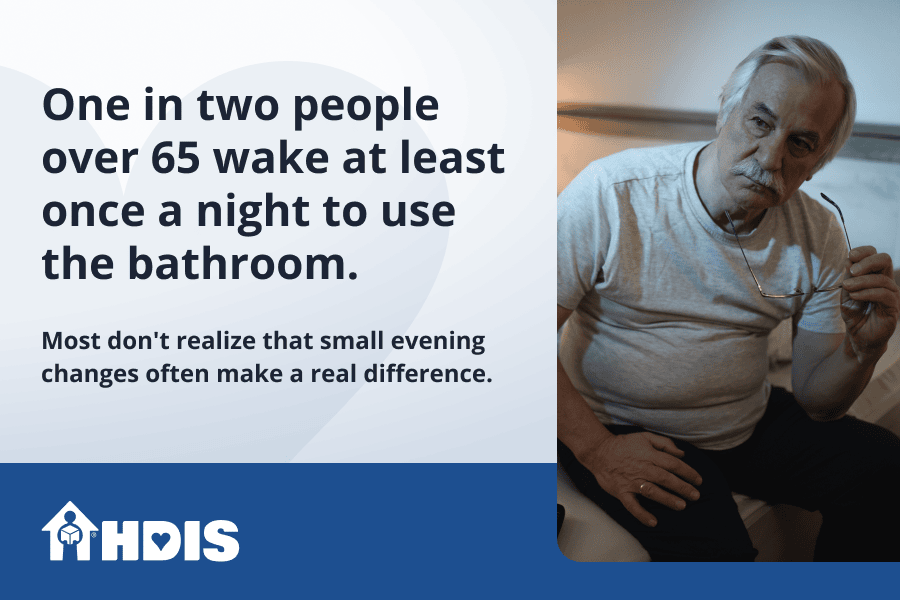
Do you wake up in the middle of the night needing the bathroom, then lie there unable to fall asleep for hours?
Some nights it is just once. Other nights you are up two or three times, and when morning comes you've not got the rest you need.
Frequent urination at night is one of the most common reasons adults over 45 lose sleep.
For those over 65, it's even more usual, with more than half waking at least once a night.
In this guide, we'll look at:
- What nocturia is
- The causes behind this condition in women and in men
- The medications and health conditions worth ruling out
- Practical ways to wake up less and rest more
- Comfortable protection for dry, calm nights
What Is Nocturia?
"Nocturia" is the medical name for waking during the night because you need to go to the bathroom.
What makes it different from staying up late is that you were asleep before and after each trip.
Waking up once is rarely a concern. However, if that happens two or more times on most nights, leaving you struggling to get through your day, it is worth a closer look.
Getting up in the dark also raises the risk of a fall, and cutting the number of night-time trips is one way to help keep you safer.
What Causes Frequent Urination at Night
There are two main things that can explain nocturia: your body is making too much urine overnight, or your bladder holds less than it once did.
Often, there may be a combination of both.
Too Much Urine While You Sleep
Drinking a lot in the evening, for example tea, coffee, or a glass of wine, fills the bladder right before bedtime. Caffeine and alcohol can irritate the bladder, making it produce more urine.
Fluids can also gather in the legs and ankles during the day, particularly if you sit for long periods of time.
Once you lie down, that fluid returns to the bloodstream, and the kidneys clear it, filling the bladder while you sleep.
A Bladder That Fills Up Faster
An overactive bladder contracts before it is full, sending a sudden, hard-to-hold urge even when only a small amount has collected.
This can happen both during the day and night.
With age, the body also releases less antidiuretic hormone (ADH) overnight. Known as vasopressin or arginine vasopressin, this chemical is produced in the brain and tells the kidneys how much water and salt to keep or release.
Less ADH means more urine at night, so you wake up needing to go.
Nocturia in Women vs. Men
Frequent urination at night affects both women and men. However, the reasons behind this condition are typically different.
Nocturia in Women
For many women, waking at night happens due to changing hormones. As estrogen falls through perimenopause and beyond, the tissues of the bladder and pelvic floor grow thinner, providing less support and control.
Pregnancy and childbirth can also weaken the muscles of the bladder. So can the years after menopause, when urgency and night-time trips often become more frequent.
Kegel exercises are a good way to strengthen your pelvic floor.
Speaking with your doctor about hormone-related changes can help weigh hormonal treatment and other options.
Frequent Urination at Night in Men
For men, waking at night is often linked to the prostate. As it enlarges with age, it can press on the urethra and stop the bladder from emptying fully.
Although an enlarged prostate is common and usually harmless, it typically means more trips through the night, a weaker stream, dribbling, or needing to go again soon after finishing.
A conversation with your doctor is worthwhile, since prostate changes are easy to manage once found.
Medications and Conditions To Rule Out
Sometimes it may be medications that cause frequent urination at night, such as diuretics that help with high blood pressure, clearing extra water from the body.
Taken in the evening, they do their work just as you are trying to sleep. Moving the dose to the morning, when your doctor agrees, can quickly solve the problem.
Certain antidepressants and drinks with caffeine can increase night-time trips as well.
There are also a few conditions worth ruling out, where nocturia deserves attention.
These include obstructive sleep apnea or early heart trouble where the body makes a large volume of urine overnight.
Diabetes and urinary tract infections can also drive frequent trips.
How To Stop Frequent Urination at Night
Once you know the likely cause, small changes can bring real relief.
- Cut off fluids in the two to three hours before bed.
- Avoid caffeine and alcohol before bedtime.
- If your ankles swell, try putting your feet up for a while in the late afternoon so that fluid clears before bedtime. Alternatively, ask your doctor about compression stockings.
- Use the bathroom right before you go to bed.
- Keep a simple diary, noting what you drink and each trip you make. This will help you spot patterns and give your doctor a detailed picture of what is going on.

When To See a Doctor
In most cases, you can manage nocturia at home.
However, if the trips start suddenly or grow more frequent, if you notice pain or burning, if there is blood in your urine, or if you feel more tired or unwell than usual, consider talking to your doctor.
They'll review your medicines, establish the cause, and point you towards the treatment that fits your situation best.
Stay Dry and Comfortable Overnight With HDIS
While you and your doctor can sort out the cause, the right protection can give you back the rest you deserve.
At HDIS, we have spent 40 years helping people find dependable overnight protection that keeps them dry and lets them sleep until morning.
Overnight leaks tend to be heavier, so high-absorbency options are typically the best choice.
Use underpads across the mattress to guard your bed, so you don't need to change sheets in the middle of the night.
They work well on their own or can be combined with personal protection options you're wearing.
Overnight protective underwear holds far more than a daytime pad, which makes it a comfortable choice for a full night's sleep.
For heavier needs, or for a person in your care who spends most of the time in bed, consider tab-style adult briefs. They offer high absorbency and are simple to change.
Frequent Urination at Night: FAQs
What causes frequent urination at night?
It can be the result of your body making more urine overnight, a bladder that holds less than it used to, or both. Additional factors that can trigger nocturia include evening fluids, caffeine and alcohol, certain medications, hormone changes in women, and prostate changes in men.
How can I stop frequent urination at night?
Avoid fluids, caffeine, and alcohol in the hours before bed and empty your bladder right before sleep. If those steps are not enough, see your doctor to check for an underlying cause.
Is waking up to go to the bathroom at night a sign of something serious?
Most of the time it is not. However, a visit to the doctor can rule out conditions like sleep apnea, heart trouble, diabetes, or an infection that also cause frequent urination.




Getting Started
Discount for Personalized Delivery Plan: No more browsing the incontinence aisle at your local drug store. Receive a 5% discount, and your products arrive on your schedule.