

In the weeks after a stroke, you've noticed something unsettling: leaks that arrive with no urge or warning at all.
When your body no longer seems to listen to you, it's natural to feel discouraged, even a little frightened.
We'll walk you through:
- What reflex incontinence is
- Why it happens
- The symptoms worth watching for
- How it differs from urge and other types of incontinence
- How reflex incontinence is treated
Reflex Incontinence Explained
Reflex incontinence, also known as reflex urinary incontinence, is the sudden release of urine when the bladder contracts and empties on its own without giving you a signal you need to use the bathroom.
It is a recognized medical condition, usually part of what doctors call a neurogenic bladder.
Your bladder and brain usually communicate through the nerves in your spinal cord.
When the connection is disrupted, the bladder can empty at a certain point of fullness without sending a message to you first.
I addition, it often doesn't empty all the way, because the muscles that squeeze and hold urine no longer work in sync.
That leftover urine can raise the risk of infections and, over time, strain the kidneys.
What Causes Reflex Urinary Incontinence?
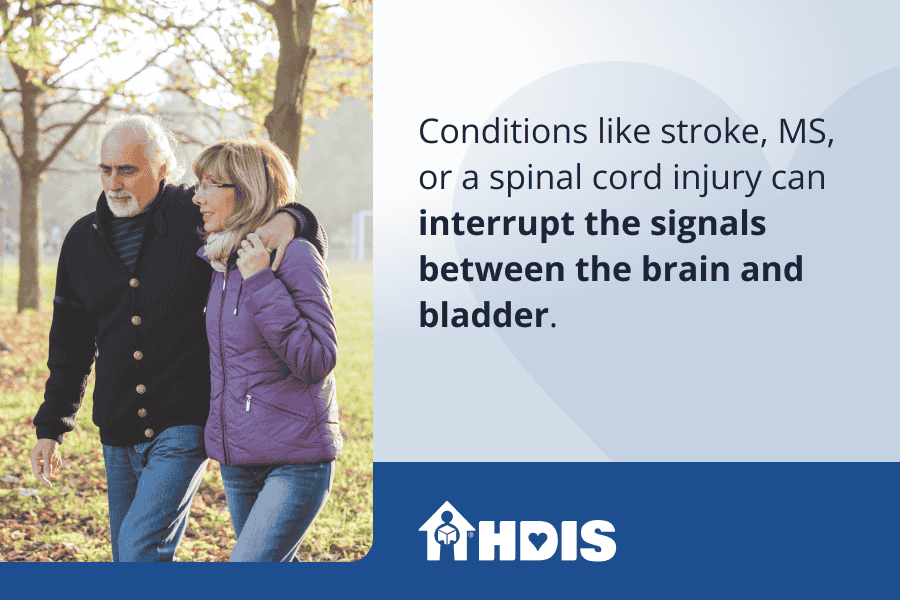
Reflex incontinence almost always traces back to a neurological condition, damaging the pathways between the brain, the spinal cord, and the bladder.
These can include:
- Spinal cord injury, which can block the nerve signals that tell the bladder when to empty
- Multiple sclerosis, which affects the brain and spinal cord and can disrupt normal bladder function
- Parkinson's disease and some forms of dementia, which can affect how the brain and bladder work together
- Stroke, which can damage the parts of the brain that control the bladder
- Diabetes, which over time can damage the nerves that control the bladder, a problem known as diabetic neuropathy
- Radiation therapy or surgery in the pelvic area, which can injure the nerves around the bladder
Reflex incontinence is usually one part of a larger medical picture.
Telling your doctor about any bladder changes you've noticed can help develop the right care plan for you.
Symptoms of Reflex Urinary Incontinence
The signs of reflex urinary incontinence look different from typical bladder changes, because the usual warning is missing.
You or the person in your care may notice:
- Leaks that arrive with no urge and no warning, sometimes in larger amounts
- Little or no feeling that the bladder is full
- A sense that the bladder does not empty fully
- More frequent urinary tract infections
- Burning when passing urine
Catching these symptoms early protects your comfort and your long-term health.
How Reflex Incontinence Is Treated
Reflex incontinence treatment is always guided by a doctor, usually a urologist. It's based on the factor causing it and aims to help empty the bladder and lower the risk of infection.
Depending on your situation, a treatment plan may include:
- Timed or triggered voiding, when you use the bathroom at set intervals to prevent leaks
- Catheterization, where a thin tube drains the bladder fully at regular times. With time, you can learn to do it on your own, which supports independence.
- Medications that calm an overactive bladder muscle
- Bladder injections such as botulinum toxin, which can ease strong bladder contractions
- Nerve stimulation or, in some cases, surgery, when other approaches don’t work
There's no single reflex incontinence treatment that works for everyone. The right plan takes into account your diagnosis and daily life.
How Reflex Incontinence Differs From Other Types of Incontinence
Incontinence comes in several forms, and while the result can feel the same, the cause behind each one varies.
Reflex incontinence usually comes with no warning. The other types tend to give you some signal or follow a clear trigger.
For example,
- Urge incontinence brings a sudden, strong need to use the bathroom that’s hard to hold back.
- Stress incontinence causes a leak when there’s pressure on the bladder, such as a cough, a sneeze, a laugh, or lifting something heavy.
- Functional incontinence happens when a physical or memory barrier keeps a person from reaching the toilet in time.
Managing Reflex Incontinence Day to Day
Alongside medical care, the right protection can make your daily routine more comfortable and predictable.
Because leaks can arrive without warning and sometimes in larger amounts, high-absorbency protection is usually the most practical choice.
It lets you move through the day and enjoy your morning coffee with friends, an afternoon in the garden, or a long visit with the grandchildren without worry.
Here are some options you may want to consider:
- High-absorbency adult briefs hold larger, sudden leaks and are simple to change.
- Protective underwear looks and feels like regular underwear and suits anyone who is still active and moving about.
- Underpads add a soft, protective layer for the bed, chair, or wheelchair, so you can settle in comfortably, knowing everything's taken care of.
Caring for the skin matters too. Regular changes and a gentle barrier cream help keep skin healthy and prevent adult diaper rash.

HDIS: Reflex Incontinence Protection You Can Count On
Choosing protection for a serious bladder condition can feel overwhelming and a little anxious.
Take it one day at a time, with HDIS by your side every step of the way.
For 40 years, we've helped people and their caregivers find protection that fits real-life scenarios, from recovery after surgery to living with a long-term neurological condition.
Our friendly product experts will walk you through sizes and absorbency at your own pace, so your first order is one you can trust.
We value discretion and how you feel. Your order comes in plain, unmarked packaging, giving nothing away to anyone who happens to see it arrive.
If you find you've ordered the wrong fit, return the unopened package back for a full refund. You'll only cover the cost of shipping the product back to us.
Many people with reflex incontinence qualify for Medicaid-covered supplies, and in supported states HDIS handles the paperwork with your doctor and plan, so you have one less thing to think about.
And if you're asking whether Medicare covers incontinence supplies, our guide breaks down exactly what's included.
Reflex Incontinence: FAQs
What is reflex incontinence?
Reflex incontinence happens when the bladder empties on its own, without the usual warning or urge.
Why does reflex incontinence happen?
It happens due to a disrupted signal between the brain and bladder that can be caused by a spinal cord injury, multiple sclerosis, or stroke.
How is reflex incontinence different from urge incontinence?
With urge incontinence, you feel a sudden, strong need to go to the bathroom before there's a leak. With reflex incontinence, that warning is usually missing, so the bladder releases urine with no signal at all.
How is reflex incontinence treated?
Your doctor decides the right reflex incontinence treatment. It may involve timed voiding, catheterization, medications, bladder injections, or sometimes surgery. All these aim to help the bladder empty safely and keep the kidneys healthy.
Can I manage reflex incontinence at home?
Yes, you can follow the treatment routine your doctor advised, plus use high-absorbency protection like briefs and underpads. They'll help you or the person in your care stay comfortable and at ease.




Getting Started
Discount for Personalized Delivery Plan: No more browsing the incontinence aisle at your local drug store. Receive a 5% discount, and your products arrive on your schedule.