
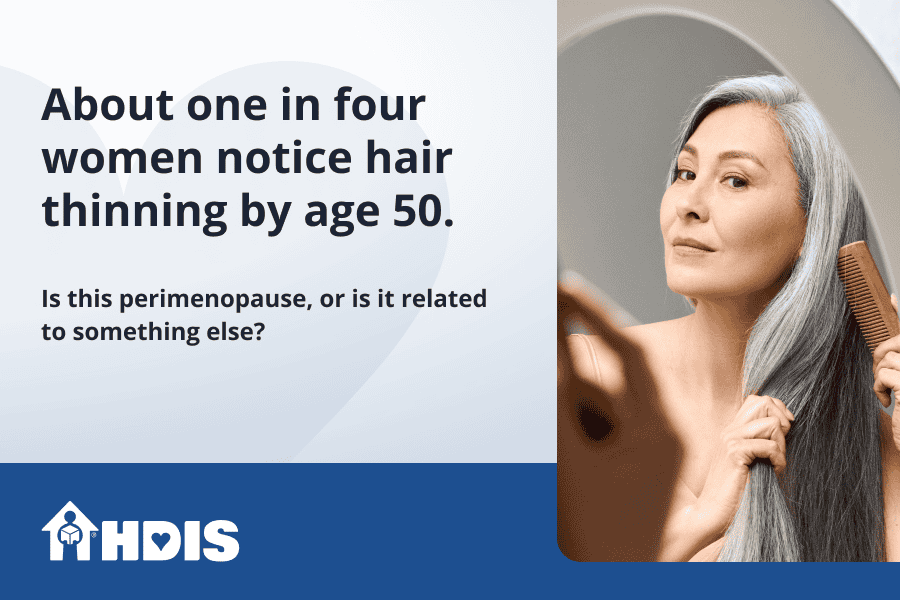
As you’re getting ready for your friends’ wedding anniversary and pull a brush through your hair, you notice more strands coming away.
The next day, leaving for the gym, your ponytail feels lighter in your hand, and the part down the center looks wider in the mirror.
No, you're not imagining it. About one in four women notice hair thinning by age 50, and for many, the reason is perimenopause.
What’s the connection, and is there a way to manage this issue?
In this guide, we'll look at:
- Whether hair loss is a sign of perimenopause
- The hormonal reason behind it
- The treatments and vitamins that can help
- When thinning is due to causes different from hormones
Is Hair Loss a Sign of Perimenopause?
For many women, thinning hair is one of the earliest and most overlooked signals that hormones are shifting.
Sometimes this starts even before they notice a change in their period.
This typically can happen in two ways.
The first is gradual thinning: less volume at the crown and finer, softer strands that are harder to style. The change comes slowly, over months and years.
Perimenopause hair thinning rarely leads to bald patches or a bare scalp the way you can see it in men.
Most women keep the majority of their hair, although density and texture change.
If you're in your 40s (sometimes even younger) and you spot hair loss plus other changes in your body, this may be a sign of perimenopause.
The second way is a faster, heavier shed, where hair comes out in noticeable amounts when you wash or brush.
That change is usually less about perimenopause and may be a reason to see a doctor, which we’ll discuss later.
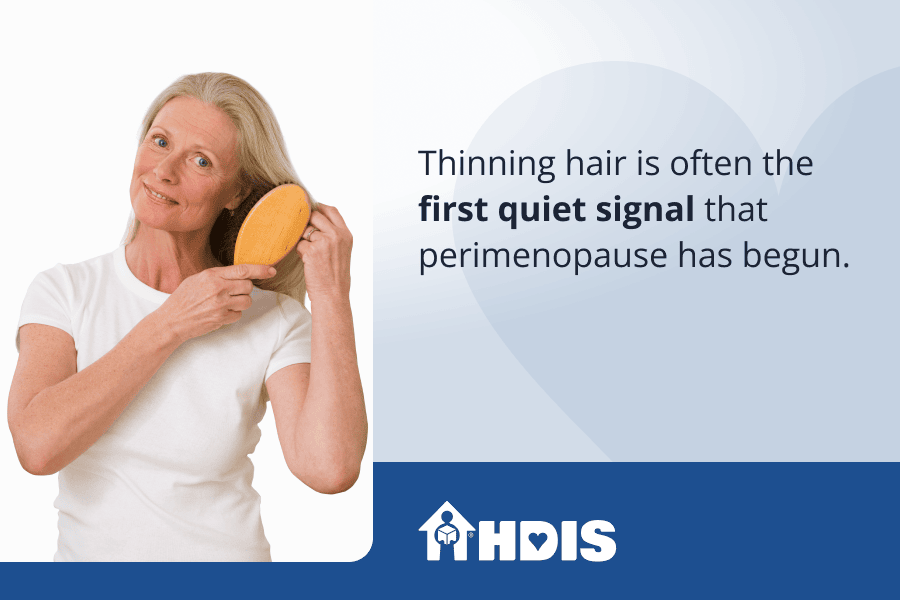
The Hormonal Cause (Estrogen and DHT)
The perimenopause hair loss is caused by two hormones.
Estrogen supports hair growth and helps shield it from other hormones.
As you move through perimenopause, its levels move up and down. When they drop, they take the protective effect away.
With less estrogen to shield them, your follicles are more exposed to androgens, the male-type hormones women also have in small amounts.
The most potent of these is dihydrotestosterone, or DHT, which your body makes from testosterone.
DHT binds to receptors in the follicle and gradually shrinks it. Each new hair grows a little finer and shorter than the last, until some follicles stop producing visible hair at all.
Dermatologists call this slow shrinking miniaturization.
Treatments That Actually Work
Perimenopause hair loss can improve with treatment, and starting early makes a big difference. Here's what you may want to consider.
Minoxidil
Minoxidil is a treatment for hair loss approved by the U.S. Food and Drug Administration (FDA).
Minoxidil keeps hair in its growth phase longer and improves blood flow to the follicle. It can be bought over the counter as a 2% or 5% topical or prescribed by a doctor for oral use.
Do Vitamins and Minerals Help?
Vitamins and minerals for perimenopause hair loss only help if your body doesn't have enough of a specific nutrient, let’s say iron. Topping up a level that's already normal does very little.
Check iron first, as low iron stores are a common cause of shedding in women. A little vitamin C helps your body absorb it.
Low vitamin D is the vitamin most often tied to thinning, and zinc can play a part too, though less often.
If you eat little or no meat, it's worth checking your vitamin B12 and folate.
Do a simple blood test before you spend money on supplements, then treat what the results show.
Everyday Care
In addition to treatment and nutrients, it’s worth considering a few gentle habits that can help with perimenopause hair loss.
Be gentle to your hair: loosen tight ponytails and buns, go easy on heat styling, and brush without yanking.
Eat enough protein and iron-rich foods and avoid strict diets that can provoke shedding.
Good sleep and stress management are also important for the hair cycle.
When Hair Loss Signals Something Else
Sometimes, hair loss may be a signal of something else that deserves attention.
See a doctor or dermatologist if you notice:
- Round or coin-sized bald patches, which can point to an autoimmune condition
- A sudden, heavy shed after illness, surgery, childbirth, high stress, or a crash diet, which can be a temporary condition; the hair usually grows back once your body recovers.
- Thinning alongside fatigue, weight changes, or feeling unusually hot or cold, which can signal a thyroid problem
- Redness, scaling, itching, or pain on the scalp, which can point to a scalp condition like dermatitis, an infection, or an allergic reaction
A quick visit and a few simple blood tests can rule other health issues out or catch them early, so you know exactly what you're dealing with and can treat it sooner.
Perimenopause Changes More Than Your Hair
Perimenopause hair loss is rarely the only thing shifting during these years.
As estrogen drops, you might notice other signs: changes in your sleep, your mood, your skin, and, for many women, your bladder.
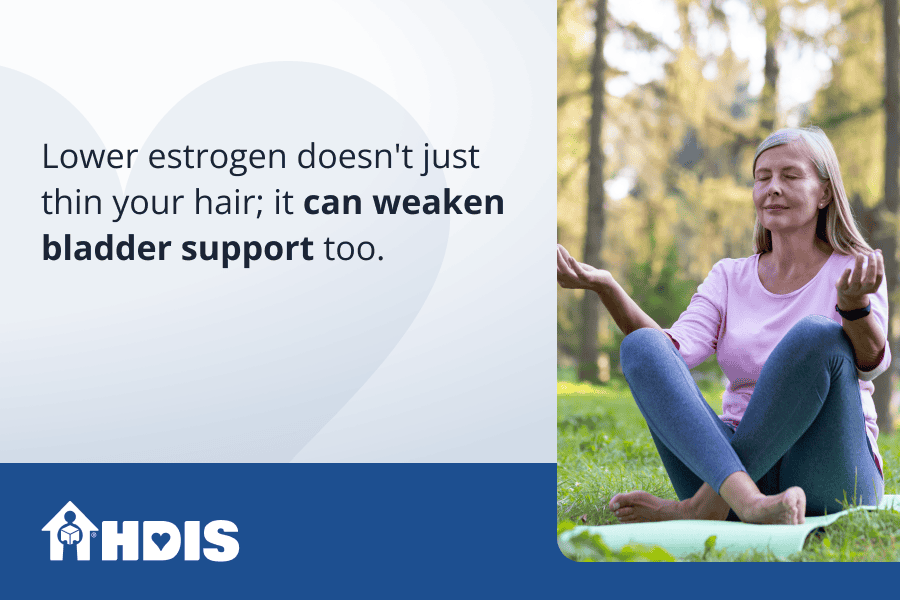
That last can catch you off guard. The same drop in estrogen that thins hair also weakens the tissues that support your bladder and pelvic floor.
A leak or a sudden urge can show up in the most unexpected moment: a laugh with friends, a fitness class, or way up a hiking trail.
These shifts in bladder health are common in your 40s and 50s, and the condition is known as incontinence.
Here's the encouraging part: unlike hair, incontinence has simple, discreet solutions you can put in place today.
With the right products and a little information, you can get back to your daily routine and the activities you love.
Meet HDIS: Discreet Support Through Perimenopause and Beyond
Since 1986, HDIS has been a trusted partner through some of the most sensitive moments in a woman's life, from the tender weeks after childbirth to recovery after surgery, the shifts of perimenopause, and the years beyond.
We can't help with perimenopause hair loss, but the bladder changes that often arrive in these years are exactly what we know best, and we'll walk you through them with discretion and care.
Check out our incontinence products, including pads and liners, booster pads, swimming pants, and protective underwear.
Worried about delivery? Everything ships in a plain box, so no one can tell what you ordered.
Changed your mind? Return any unopened pack for a full refund. You’ll just need to cover the cost of shipping the product back to us.
And with a Personalized Delivery Plan, your next order arrives right on time, so you always have what you need.
Perimenopause Hair Loss: FAQs
Does perimenopause cause hair loss?
Yes. Low estrogen leaves hair follicles more exposed to androgens like DHT, which shrinks them over time and leads to gradual thinning. It's a common, normal part of the transition for many women.
Will my hair grow back after perimenopause?
Some regrowth is possible, especially with early treatment, although maintaining results require ongoing care. Seeing a dermatologist early gives you the best odds.
What other changes happen alongside perimenopause hair loss?
The same hormonal shift can bring hot flashes, mood and sleep changes, drier skin, and bladder changes like leaks or urgency.
Getting Started
Discount for Personalized Delivery Plan: No more browsing the incontinence aisle at your local drug store. Receive a 5% discount, and your products arrive on your schedule.