
Small-Space Gardening: Reap the Pleasures Without the Toil
Imagine an area in your home where you could go to relax, get your mind off the cares of the day, and feel energized again. Are you thinking of a high-tech entertainment room or a luxurious spa bath? Your space to re-energize doesn’t need to be all that elaborate; simply sharing your home with living, growing plants can lighten your mood.
“I know I need to be around green things,” says Carole Usaj, HTR, OTR. “It lifts my spirits.”
Dancing with the Daffodils
Carole is a horticultural and occupational therapist, who works with the Cleveland Clinic Children’s Hospital and other care facilities. 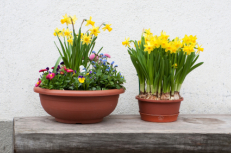 Over the years, she has helped people of all ages enrich their lives through small-space gardening – from square-foot plots to 20-inch pots. “Working with the soil and plants, I have found, is so distracting. You can forget about things that are bothering you.”
We caught up with Carole in February, when her potted tulips were practically “growing in front of my eyes, 4 to 5 inches in a few days.” She likes to have something blooming all year round and will force bulbs during cold months in Ohio. One way to force a tulip or daffodil bulb to bloom early is to pot it in soil and leave it in a garage or other cold, shaded area for 8 to 12 weeks. When you bring the pot back into your warm home, the bulb begins to grow, filling your home with life and color…and perhaps unlocking memories of the famous Wordsworth poem: “And then my heart with pleasure fills, And dances with the daffodils.”
“Amaryllis bulbs will grow huge red or varicolored blooms indoors, with even less trouble,” says Carole. Put pretty pebbles in the bottom of a narrow glass vase, just big enough for the bulb. Sit the bulb with its roots down and put more pebbles around them. Keep the roots covered with water (the bulb should stay dry) and soon you’ll be able to watch it grow and bloom. “The bulb has everything, all its nutrients, stored inside it. It’s a self-contained garden,” she says. “Just provide water and sunlight.”
When you’ve coaxed a plant to grow, especially outside of its normal season, you’ve got something to talk about – and to look at. Fill a sun-catching shelf with some plants that bloom (such as African violets) and some that provide foliage (like bright-leafed coleus), and you have an indoor garden. It takes about 15 to 18 plants in 6- to 8-inch pots, say researchers, to remove air pollutants in a typical home and provide a little humidity.
Container Gardens Offer Variety
Just outside your door, on a patio or balcony, you can create a landscape of plants using pots and other containers. Putting your garden in containers lets you rearrange your landscape and work in it without bending, digging, or getting on your knees, according to Carole. You can literally sit and garden.
Even large planters can be kept lightweight. Start with a resin, not a clay, pot. Put the little disposable planters, the ones that store-bought plants come in, upside down in the bottom of the pot for filler. Saucers with caster wheels let you easily move these pots around for an ever-changing scene.
Your landscape can also include hanging planters (a garden shepherd’s hook will do), window or railing boxes, and small trellises. Maintenance will be less of a chore, too, with just a few handy tools. Get a mini-hose and turn your heavy watering can into a decorative object. Hanging basket pulleys enable you to pull down the plant for watering.
Carole has one chief rule for healthier plants: “Don’t love them too much. Everyone loves to water, but overwatering can drown your plant and let fungus form.”
One way to prevent fungus, along with molds, weeds, and other pests, is to use a soilless planting medium, found at nurseries. These treated natural materials are good for plants – think of them as the cleanest dirt you’ll ever find!
A tremendous variety of plants can be grown in containers: Shrubs (try lilac); vegetables, such as lettuce and tomatoes; edible flowers; grasses; and evergreens. Herbs add scent to your garden and interest to your meals. Many, like dill and chives, are relatively easy to grow on a sunny balcony or windowsill. Mix and match plants in your containers, for beautiful, miniature landscapes.